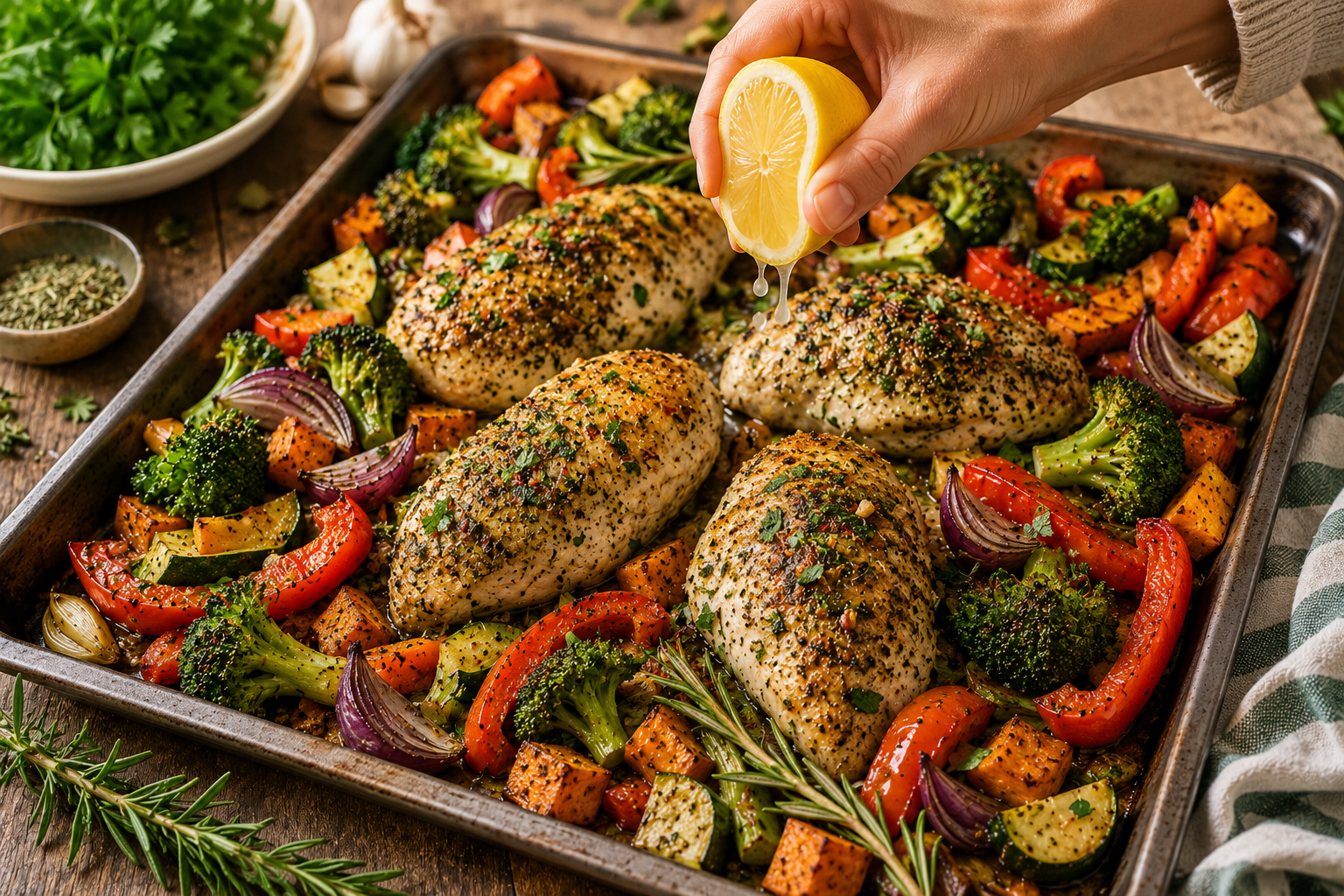
Clean eating has an unfortunate tendency to look very beige on the internet.
Plain chicken. Steamed broccoli. Brown rice.
Repeat until enthusiasm disappears.
But cooking with simple, minimally processed ingredients doesn’t mean giving up the things that make food worth eating.
Herbs, spices, citrus, garlic, roasted vegetables, avocado, berries, nuts, seeds, and good sauces can transform simple ingredients into meals you actually look forward to.
The secret to clean eating isn’t learning to tolerate boring food.
It’s learning how to make simple food taste better.
What Does Clean Eating Actually Mean?
There isn’t one official definition of “clean eating,” and you don’t need a complicated set of rules to use the idea in your own kitchen.
A practical approach is simply to build more of your meals around foods such as:
- Vegetables and fruit
- Whole grains
- Beans and lentils
- Eggs
- Fish and lean meats
- Nuts and seeds
- Herbs and spices
- Minimally processed ingredients
That doesn’t mean every ingredient in your kitchen needs to pass some imaginary purity test.
And it certainly doesn’t mean packaged food is automatically “bad.”
Think of clean eating as a direction rather than a competition.
1. Herb-Crusted Chicken
Chicken breast has become almost synonymous with healthy eating.
Unfortunately, so has dry chicken breast.
The solution isn’t necessarily adding a complicated sauce. Herbs, garlic, lemon, black pepper, and a little olive oil can add plenty of flavor while keeping the ingredient list simple.
Fresh parsley, rosemary, thyme, oregano, and basil all work beautifully with chicken.
Pair it with roasted vegetables and potatoes, quinoa, or brown rice for an easy complete meal.
Perfect for: High-protein weeknight dinners.
2. Roasted Vegetable Medley
If you’ve only eaten certain vegetables boiled or steamed, roasting them can feel like discovering an entirely different ingredient.
High heat creates browned edges and concentrates natural sweetness.
Try combining:
- Broccoli
- Bell peppers
- Zucchini
- Red onion
- Carrots
- Sweet potatoes
Toss them with olive oil, garlic, black pepper, and herbs before roasting.
The important part is giving the vegetables enough room.
Crowd everything together and they’ll steam.
Give them space and they’ll roast.
It’s a small distinction with considerably more delicious consequences.
Perfect for: Meal prep, side dishes, and using leftover vegetables.
3. Avocado Toast — Four Ways
Avocado toast is simple enough to become boring and flexible enough that it never has to.
Start with whole-grain toast and mashed or sliced avocado.
Then change the toppings.
Egg & Chili
Add a poached or fried egg, chili flakes, and black pepper.
Tomato & Basil
Add sliced tomatoes, basil, and a squeeze of lemon.
Cucumber & Seeds
Add cucumber, pumpkin seeds, sesame seeds, and fresh herbs.
Mediterranean
Add tomatoes, cucumber, feta, oregano, and a little olive oil.
One basic idea becomes four completely different breakfasts or lunches.
Perfect for: Quick breakfasts and light lunches.
4. Berry Chia Pudding
Chia pudding is one of those recipes where the refrigerator does most of the work.
Mix chia seeds with milk, add vanilla and a little sweetness if desired, and refrigerate until thickened.
Then add berries.
Blueberries, strawberries, raspberries, and blackberries all work beautifully.
For extra texture, finish with chopped nuts, pumpkin seeds, granola, or coconut.
Prepare it the night before and breakfast is already waiting when you wake up.
Perfect for: Make-ahead breakfasts.
5. Use Citrus Instead of Just Adding More Salt
One of the simplest flavor tricks in healthy cooking is acid.
A squeeze of lemon or lime added after cooking can completely change a dish.
Try lemon with:
- Chicken
- Salmon
- Shrimp
- Broccoli
- Asparagus
Try lime with:
- Black beans
- Avocado
- Tacos
- Chicken tortilla soup
- Corn
When food tastes flat, the answer isn’t always more salt.
Sometimes it needs brightness.
6. Build Flavor With Herbs and Spices
A cabinet full of spices is essentially a collection of ways to make the same basic ingredients taste completely different.
Chicken + garlic + rosemary + lemon gives you one dinner.
Chicken + cumin + chili + lime gives you another.
Chicken + smoked paprika + oregano gives you something different again.
The protein hasn’t changed.
The personality has.
A useful starter collection includes:
Garlic powder, smoked paprika, cumin, oregano, thyme, cinnamon, chili powder, black pepper and red pepper flakes.
Then expand based on the cuisines you enjoy cooking.
7. Make Healthy Bowls That Don’t Taste Like Homework
Bowls are perfect for clean eating because they’re basically a framework rather than a recipe.
Start with:
Base: quinoa, brown rice, greens, or another grain.
Add:
Protein: chicken, shrimp, salmon, eggs, chickpeas, or beans.
Then:
Vegetables: roasted or fresh.
Finally add the part people sometimes forget:
Flavor.
That might be avocado, herbs, salsa, hummus, lemon dressing, tahini, yogurt sauce, or something spicy.
A bowl needs something that brings the ingredients together.
Otherwise you’ve simply placed several responsible foods beside each other.
8. Let the Oven Do More Work
Roasting is one of my favorite clean-eating shortcuts because it improves flavor without requiring complicated preparation.
Vegetables caramelize.
Chicken browns.
Salmon develops color.
Sweet potatoes become sweeter.
And several ingredients can often cook together on the same sheet pan.
That’s why our sheet-pan recipes will eventually fit very naturally here.
Perfect for: Busy weeknights and minimal cleanup.
9. Keep a Few Flavor Boosters Ready
Healthy cooking gets easier when you don’t need to create every flavor from scratch at 6 p.m.
Useful ingredients to keep around include:
- Lemons and limes
- Fresh or dried herbs
- Garlic
- Dijon mustard
- Greek yogurt
- Hummus
- Salsa
- Parmesan
- Nuts and seeds
- Olive oil
A spoonful, squeeze, or sprinkle can turn very basic ingredients into an actual meal.
A Simple Clean Eating Formula
When you don’t know what to cook, try this:
Choose one protein.
Chicken, fish, shrimp, eggs, tofu, beans, or lentils.
Choose vegetables.
Fresh, frozen, roasted — whatever makes sense.
Add a satisfying carbohydrate.
Potatoes, sweet potatoes, quinoa, brown rice, whole-grain pasta, or bread.
Add flavor.
Herbs, spices, citrus, avocado, sauce, cheese, nuts, or seeds.
That’s dinner.
You don’t need twelve superfoods and an ingredient that requires explaining to the cashier.
Clean Eating Doesn’t Need to Be Perfect
This is the part I particularly want in the article.
“Clean eating” can become unnecessarily restrictive if every ingredient gets divided into clean and unclean.
That’s not what we’re doing here.
A jar of tomato sauce can make Tuesday easier.
Frozen vegetables are enormously useful.
Canned beans can turn into dinner in minutes.
And occasionally ordering pizza doesn’t erase everything you cooked earlier in the week.
We’re simply making it easier to cook more meals around nutritious ingredients.
That’s a much more sustainable goal.
Start With Food You Already Like
If you love tacos, make tacos with plenty of vegetables and beans.
If you love pasta, add vegetables and protein.
If you love breakfast, make eggs, avocado toast, oatmeal, or chia pudding.
If you love chicken, learn three completely different seasoning combinations.
Healthy eating becomes considerably easier when you’re improving food you already enjoy rather than trying to become somebody who suddenly loves plain steamed broccoli.
Fresh ingredients are a wonderful starting point.
Flavor is what makes you come back tomorrow.