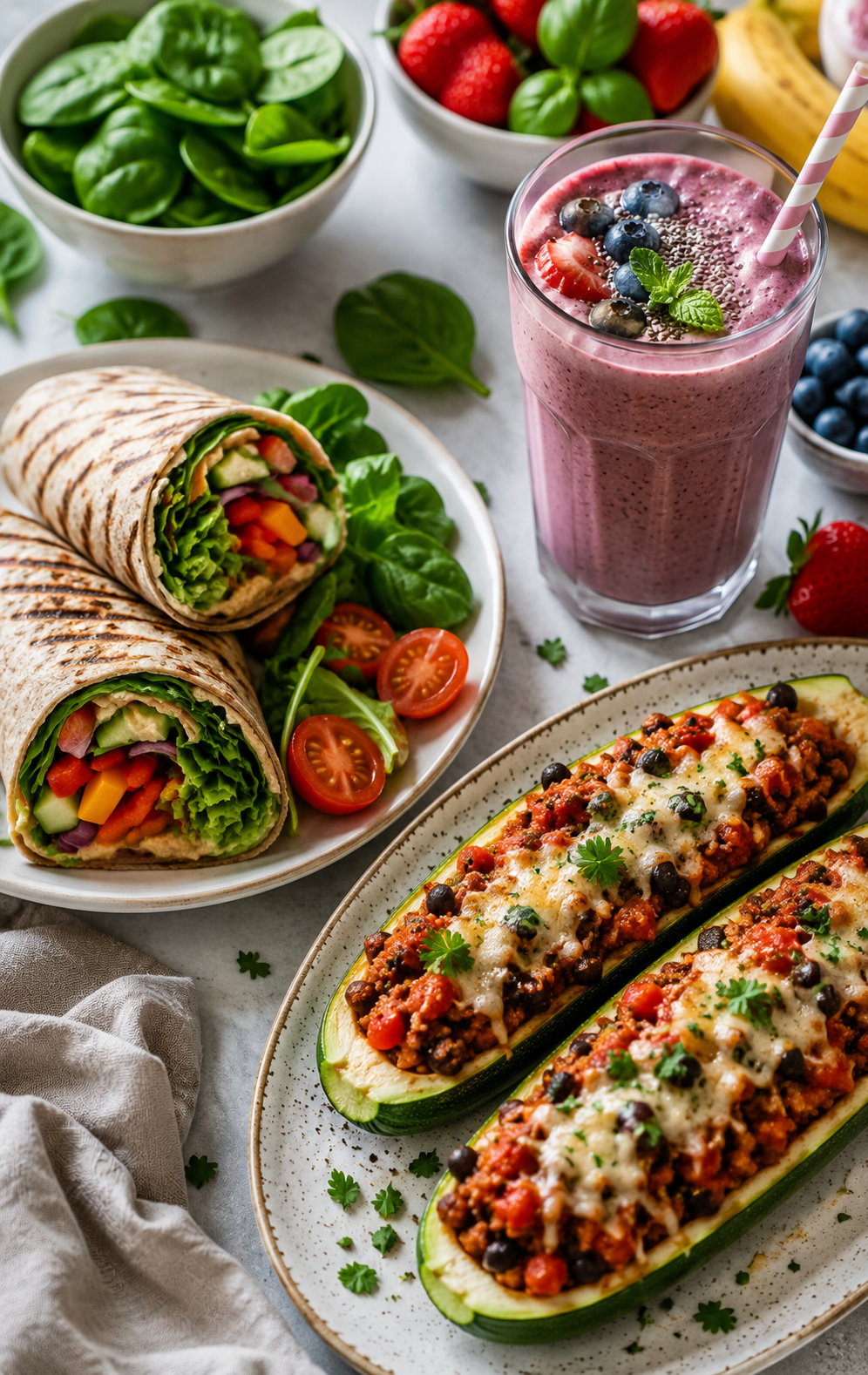
Healthy cooking sounds simple enough.
Buy nutritious ingredients. Cook them. Eat them.
Then Wednesday arrives, you’re hungry, you haven’t planned dinner, the chicken is still frozen, and the vegetables you enthusiastically bought on Sunday are beginning to look concerned.
The hardest part of healthy cooking often isn’t knowing what foods are nutritious.
It’s making those foods easy enough to cook in everyday life.
Fortunately, you don’t need elaborate meal plans, expensive ingredients, or an entire Sunday devoted to meal prep.
A few simple habits can make nutritious meals considerably easier to put on the table.
1. Start With Meals You Already Enjoy
You don’t need to replace everything you eat with completely new “healthy” recipes.
Start with familiar meals and ask what you could add.
Love pasta?
Add broccoli, spinach, mushrooms, peas, chicken, or shrimp.
Love tacos?
Add black beans, avocado, tomatoes, lettuce, peppers, or corn.
Love scrambled eggs?
Add spinach, mushrooms, tomatoes, or peppers.
Love pizza?
Serve it with a big salad or add plenty of vegetables on top.
Improving meals you already enjoy is usually much easier than trying to reinvent the way you eat overnight.
2. Keep Fresh Ingredients — But Don’t Depend on Them
Fresh vegetables and fruit are wonderful.
They’re also capable of going from “I’ll cook that tomorrow” to “what happened in this refrigerator?” surprisingly quickly.
That’s why I like combining fresh foods with ingredients that last longer.
Keep fresh produce you know you’ll use, but also consider having:
- Frozen broccoli
- Frozen spinach
- Frozen berries
- Frozen mixed vegetables
- Canned tomatoes
- Canned beans
- Whole grains
- Eggs
Frozen vegetables are particularly useful because they’re already washed and prepared.
Healthy cooking gets much easier when missing one fresh ingredient doesn’t derail dinner.
3. Build Meals Around a Simple Formula
When you don’t know what to cook, don’t start with a recipe.
Start with four components.
Choose a Protein
Chicken, fish, shrimp, eggs, beans, lentils, tofu, Greek yogurt, or another protein-rich food.
Add Vegetables or Fruit
Choose whatever you already have available.
Add Something Satisfying
Potatoes, sweet potatoes, quinoa, brown rice, pasta, bread, or tortillas can turn separate ingredients into an actual meal.
Add Flavor
Herbs, spices, lemon, lime, salsa, hummus, avocado, cheese, nuts, seeds, or a simple dressing.
That’s not a strict nutritional formula.
It’s simply a useful way to answer:
“What can I make with this?”
4. Learn a Few Herbs and Spices
One of the easiest ways to make healthy food more enjoyable is learning how dramatically seasoning can change simple ingredients.
Consider chicken.
Add rosemary, garlic, and lemon and you get one flavor profile.
Use cumin, chili powder, and lime and you’ve got another.
Try smoked paprika, garlic, and oregano and dinner changes again.
You don’t need 47 spice jars.
A useful collection might include:
- Black pepper
- Garlic powder
- Smoked paprika
- Cumin
- Oregano
- Thyme
- Chili powder
- Cinnamon
- Red pepper flakes
Then add more based on the cuisines you enjoy.
5. Cook Once, Eat Twice
This may be my favorite form of meal prep because it doesn’t particularly feel like meal prep.
If you’re already cooking chicken, cook a little extra.
Making quinoa? Double it.
Roasting vegetables? Fill the sheet pan.
Making soup or stew? Save another portion.
Tonight’s roasted chicken can become tomorrow’s wrap.
Extra quinoa can become a bowl.
Roasted vegetables can go into an omelette.
Dinner leftovers can become lunch.
You’re already cooking.
You might as well make the effort work twice.
6. Plan Meals — But Don’t Overplan
Meal planning can make healthy cooking considerably easier.
But you don’t necessarily need:
MONDAY 6:15 PM — SALMON
TUESDAY 6:12 PM — CHICKEN
WEDNESDAY 6:08 PM — EXISTENTIAL CRISIS WITH QUINOA
Instead, choose perhaps four or five meals you’d be happy to make during the coming week.
Buy the ingredients.
Then decide which meal fits each day as the week unfolds.
Have more time tonight?
Make the stuffed peppers.
Need dinner quickly?
Cook salmon or shrimp.
Know tomorrow will be chaotic?
Start the slow cooker.
A meal plan should make your week more flexible, not give you another schedule to fail.
7. Have an Emergency Dinner
This one is important.
Keep ingredients for at least one meal you can make when the original dinner plan collapses.
Maybe that’s:
Eggs + whole-grain toast + vegetables
or:
Whole-grain pasta + tomato sauce + frozen spinach
or:
Black beans + tortillas + salsa + cheese
It doesn’t need to be impressive.
It needs to prevent “there’s nothing to eat” from becoming the default conclusion whenever plans change.
8. Use Your Freezer Strategically
Your freezer isn’t just where forgotten leftovers go to retire.
Freeze foods you genuinely intend to use.
Useful options include:
- Individual portions of soup
- Cooked chicken
- Homemade sauces
- Bread
- Berries
- Chopped vegetables
- Stews
And label things.
Because three months later:
“I think that’s soup”
isn’t a meal plan.
9. Choose Cooking Methods That Match Your Day
Not every healthy recipe is equally convenient.
That’s why it’s useful to have several cooking methods in your repertoire.
Need dinner quickly?
Try a skillet meal, shrimp, eggs, or fish.
Don’t want to stand at the stove?
Use a sheet pan.
Have time now but none later?
Use the slow cooker.
Want tomorrow’s lunch too?
Make soup, stew, stuffed peppers, pasta, or a casserole.
The best cooking method isn’t always the theoretically healthiest or most sophisticated.
It’s the one that gets dinner made.
10. Prep Ingredients Instead of Entire Meals
Traditional meal prep works wonderfully for some people.
But you don’t necessarily need seven identical containers waiting in the refrigerator.
Try preparing ingredients instead.
Cook quinoa.
Wash greens.
Chop vegetables.
Make a dressing.
Roast sweet potatoes.
Cook chicken.
Then combine them differently throughout the week.
Monday might become a chicken bowl.
Tuesday becomes wraps.
Wednesday becomes salad with roasted vegetables.
Same preparation.
Different meals.
11. Keep Healthy Cooking Convenient
Convenience isn’t the enemy.
Pre-cut vegetables can help.
Canned beans can help.
Frozen produce can help.
Rotisserie chicken can sometimes help.
Jarred sauces can help.
The question isn’t whether every ingredient was prepared entirely from scratch.
A more useful question is:
Does this make it easier for me to put together a nutritious meal?
If it does, it’s doing something valuable.
12. Make Food You Actually Want to Eat
This may be the most important healthy cooking tip of all.
A technically nutritious recipe isn’t particularly useful if nobody wants to eat it.
Roast vegetables until they develop flavor.
Season your chicken.
Put dressing on the salad.
Add Parmesan to the pasta.
Use the sauce you enjoy.
Make chocolate pudding for dessert.
Healthy eating doesn’t require food to become joyless.
In fact, making nutritious food taste genuinely good is one of the best ways to make healthy cooking sustainable.
A Simple Healthy Cooking Plan for This Week
If all these tips sound useful but you don’t know where to begin, try just five things:
- Choose four dinners before grocery shopping.
- Buy one fresh and one frozen vegetable option.
- Cook extra of one ingredient.
- Keep ingredients for one emergency dinner.
- Try one new herb, spice, or flavor combination.
That’s it.
You don’t need to reorganize your entire kitchen.
Do those things consistently and you’ll already have made healthy cooking easier.
Nutritious Meals Don’t Need to Be Complicated
The goal isn’t to become extraordinarily good at meal planning.
It’s to make nutritious food easier to choose on ordinary days.
Keep useful ingredients around.
Learn a few flavor combinations.
Cook extra when it makes sense.
Use shortcuts without feeling guilty about them.
And choose recipes based on the amount of time and energy you actually have.
Because the healthy meal you make on a busy Wednesday is considerably more useful than the perfect meal you planned to make someday.