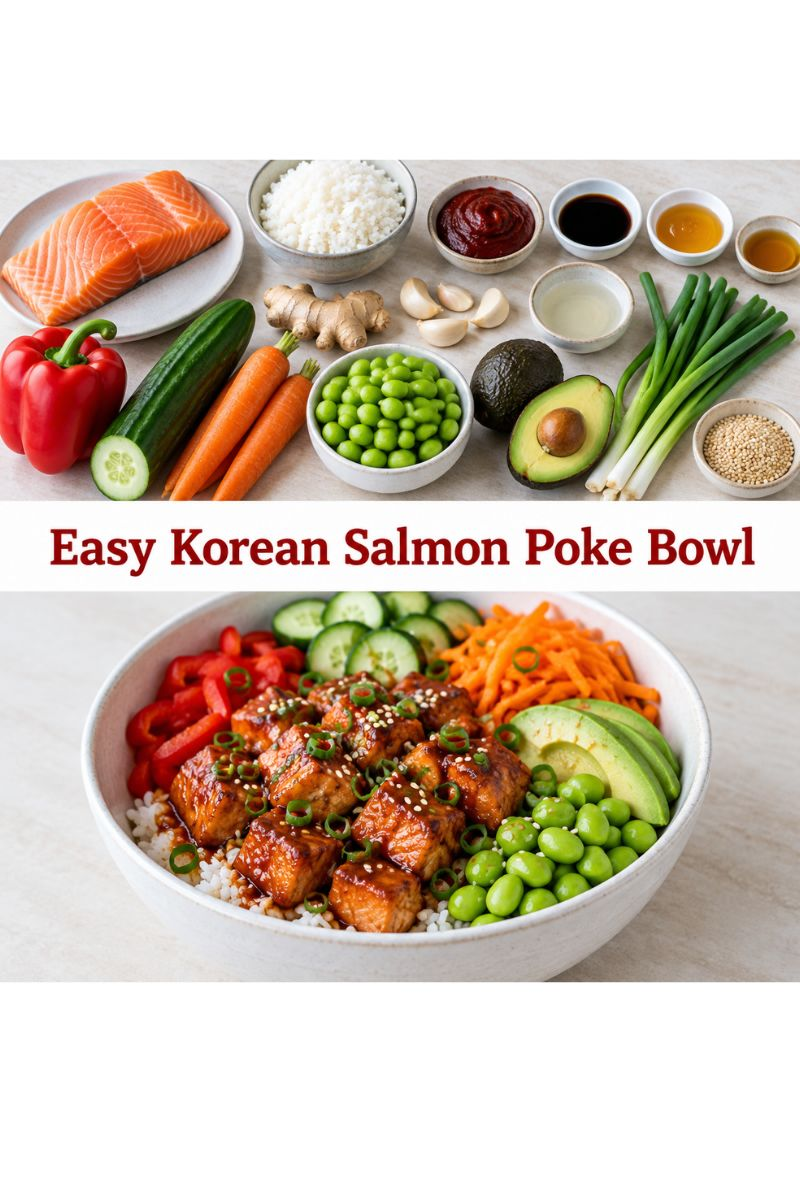
Looking for a colorful dinner that’s easy to put together and full of flavor?
This Korean-inspired poke bowl with salmon combines tender gochujang-glazed salmon, fluffy rice, crunchy vegetables, and a savory-sweet sesame dressing.
The best part? You can adjust the toppings to suit your family.
Maybe your kids love cucumbers but aren’t so enthusiastic about spicy sauces. Perhaps you prefer extra vegetables, while someone else wants a generous serving of salmon.
That’s what makes a build-your-own rice bowl such a practical family dinner.
And if you’re looking for something beautiful to serve, the combination of orange salmon, red bell peppers, green cucumber, and fresh carrots looks especially inviting in a simple white bowl.
What Makes This Korean Poke Bowl Different?
Traditional Hawaiian poke usually features diced seafood, often served raw. This recipe takes inspiration from the popular poke bowl format but uses cooked salmon and Korean-inspired flavors.
The main ingredient that gives our salmon its distinctive flavor is gochujang, a Korean fermented chili paste.
Gochujang adds a savory, slightly sweet heat that works beautifully with salmon, especially when balanced with soy sauce, honey, ginger, and sesame oil.
If you’re cooking for children or anyone who prefers milder food, you can reduce the gochujang and serve additional sauce separately.
Why You’ll Love This Recipe
- Colorful and fresh: Salmon, cucumbers, carrots, and bell peppers create a beautiful combination.
- Customizable: Everyone can choose their favorite toppings.
- Easy to prepare: Much of the work involves slicing vegetables and preparing a quick glaze.
- Flexible: Use salmon, chicken, or tofu.
- Great for leftovers: Cook components ahead and assemble fresh bowls when you’re ready to eat.
Easy Korean-Inspired Salmon Poke Bowl Recipe
Servings: 4
Prep time: Approximately 15–20 minutes
Cooking time: Approximately 15–20 minutes, plus rice cooking if needed
Total time: Approximately 35–40 minutes
Ingredients
For the Salmon
- 1¼ lb (about 570 g) skinless salmon fillet, cut into large bite-sized cubes
- 1 tablespoon gochujang paste
- 1 tablespoon low-sodium soy sauce
- 2 teaspoons honey
- 1 teaspoon toasted sesame oil
- 1 teaspoon freshly grated ginger
- 1 garlic clove, minced
- 1 teaspoon rice vinegar
- 1 teaspoon neutral cooking oil, for the baking tray or pan
For the Bowls
- 3 cups cooked jasmine rice, brown rice, or short-grain rice
- 1 medium cucumber, sliced into half-moons
- 1 large carrot, shredded or cut into thin strips
- 1 red bell pepper, thinly sliced
- 1 cup shelled edamame, cooked according to package directions
- 1 avocado, sliced
- 2 green onions, thinly sliced
- 2 teaspoons sesame seeds
For the Quick Sesame Dressing
- 1 tablespoon low-sodium soy sauce
- 1 tablespoon rice vinegar
- 1 teaspoon toasted sesame oil
- 1 teaspoon honey
- 1–2 tablespoons water, to adjust consistency
How to Make a Korean Salmon Poke Bowl
Step 1: Prepare the Rice
Cook your chosen rice according to the package instructions.
If you’re using leftover rice, reheat it thoroughly until steaming hot.
Divide the cooked rice between four serving bowls when you’re ready to assemble.
Step 2: Make the Gochujang Glaze
In a medium bowl, whisk together the gochujang, soy sauce, honey, sesame oil, grated ginger, minced garlic, and rice vinegar.
The mixture should be smooth enough to coat the salmon.
Taste the glaze before adding the raw fish. If you prefer a milder flavor, use less gochujang.
Step 3: Prepare and Cook the Salmon
Preheat your oven to 425°F (220°C).
Lightly oil a lined baking sheet.
Pat the salmon dry with paper towels and cut it into approximately 1-inch pieces.
Gently toss the salmon in the glaze until coated.
Arrange the pieces in a single layer on the baking sheet.
Bake for approximately 10–15 minutes, depending on the thickness of the pieces, checking early to avoid overcooking.
For food safety, cook the salmon until the center reaches 145°F (63°C) on a food thermometer.
The glaze should look glossy, and the fish should separate easily with a fork.
Step 4: Prepare the Vegetables
While the salmon cooks, wash and prepare the vegetables.
Slice the cucumber, shred the carrot, cut the bell pepper into thin strips, and slice the green onions.
Prepare the edamame according to the package instructions.
Cut the avocado just before assembling the bowls to help prevent browning.
Step 5: Mix the Dressing
In a small bowl, whisk together the soy sauce, rice vinegar, sesame oil, honey, and water.
Taste and adjust the balance.
If you enjoy a tangier dressing, add a little extra rice vinegar.
For a milder family-friendly version, keep the dressing separate so everyone can decide how much to use.
Step 6: Assemble the Bowls
Divide the rice between four bowls.
Add the cooked salmon, then arrange the vegetables around it in separate sections.
Try placing the bright orange salmon beside the cucumber, red bell pepper, and shredded carrot for a colorful presentation.
Finish with sliced avocado, green onions, and sesame seeds.
Drizzle with the dressing or serve it on the side.
Your Korean-inspired salmon poke bowls are ready to enjoy!
Three Easy Korean Poke Bowl Variations
One of the best things about this recipe is how easy it is to adapt.
1. Korean Chicken Poke Bowl
Replace the salmon with about 1¼ lb (570 g) boneless, skinless chicken breast or thighs, cut into bite-sized pieces.
Coat with the same glaze and cook in a lightly oiled skillet or oven until the chicken reaches an internal temperature of 165°F (74°C).
Because chicken cooks differently from salmon, allow additional cooking time as needed.
Serve with the same rice and vegetables.
This is a practical variation for family members who don’t enjoy fish.
2. Korean Tofu Poke Bowl
For a vegetarian variation, replace the salmon with approximately 14–16 oz (400–450 g) extra-firm tofu.
Drain and press the tofu, then cut it into cubes.
Toss lightly with neutral oil and bake at 425°F (220°C) until golden and crisp around the edges, usually about 20–25 minutes, turning halfway through.
Warm the gochujang glaze separately and toss it with the cooked tofu before serving.
Use maple syrup instead of honey if you want a vegan version, and check that your gochujang and other condiments contain no animal-derived ingredients.
3. Colorful Bell Pepper and Tomato Bowl
Want to make your bowl even more colorful?
Add thin strips of yellow and red bell pepper, along with halved cherry tomatoes.
For extra freshness, toss the tomatoes with a little rice vinegar before serving.
This version works especially well when you want a crunchy, vegetable-packed meal.
The tomatoes and bell peppers aren’t traditional poke ingredients, but they make a delicious addition to this flexible fusion bowl.
How to Make Your Korean Poke Bowl Look Beautiful
You don’t need professional food photography skills to make an attractive meal.
A few small details make a big difference.
Use a white bowl. The bright salmon, green vegetables, and red peppers stand out against a clean white background.
Arrange the toppings separately. Instead of mixing everything together, place each vegetable in a small section around the rice.
Keep the salmon visible. The glazed salmon is the star of the dish, so position it prominently.
Finish with contrast. Sesame seeds, green onions, and a small drizzle of dressing add texture and color.
Serve immediately. Freshly sliced vegetables and warm salmon make a more appealing combination than toppings that have been sitting out.
It’s an easy way to make a regular weeknight dinner feel a little special.
Make-Ahead and Storage Tips
This meal works well when you prepare the components separately.
Rice: Cook ahead if convenient, refrigerate promptly, and store in a covered container. Reheat thoroughly before serving.
Vegetables: Slice cucumbers, carrots, and bell peppers ahead of time and keep them refrigerated in separate containers.
Dressing: Prepare in advance and refrigerate in a sealed container.
Salmon: Cook and refrigerate promptly. Use refrigerated leftovers within 3–4 days, or sooner if any ingredient’s storage guidance requires it.
For food safety, refrigerate perishable ingredients within two hours, or within one hour if the surrounding temperature exceeds 90°F (32°C).
Store the warm components separately from fresh vegetables and avocado for the best texture.
Frequently Asked Questions
Is a Korean poke bowl a traditional Korean dish?
No. Poke originated in Hawaii, while this recipe incorporates Korean-inspired ingredients such as gochujang and sesame oil. It’s best described as a Korean-inspired fusion rice bowl.
Can I make this poke bowl without raw fish?
Absolutely. This recipe uses fully cooked salmon, making it an approachable option for families that prefer cooked seafood.
Can I use frozen salmon?
Yes. Thaw the salmon safely in the refrigerator before preparing the recipe. Follow the package’s handling instructions and cook to the recommended internal temperature.
Is gochujang very spicy?
The heat varies by brand. Start with a small amount and taste the glaze before it touches raw salmon. You can always serve additional gochujang sauce on the side.
Can I make a Korean poke bowl without rice?
Yes. Try quinoa, cauliflower rice, or a bed of mixed greens. The flavor and texture will change, but the same toppings work well.
What vegetables go well with a salmon poke bowl?
Cucumber, carrots, edamame, avocado, red cabbage, radishes, bell peppers, and green onions all make colorful additions.
Can I make this recipe gluten-free?
Use certified gluten-free tamari instead of regular soy sauce, and verify that your gochujang and all other packaged ingredients are gluten-free. Many conventional gochujang products contain wheat or other gluten-containing ingredients.
Final Thoughts
A homemade Korean-inspired poke bowl is a delicious way to turn a few simple ingredients into a colorful family dinner.
The combination of warm rice, savory-sweet salmon, crunchy vegetables, and sesame dressing offers plenty of flavor without making dinner unnecessarily complicated.
And remember: you don’t have to make every bowl identical.
Let your family choose their favorite vegetables, adjust the spice level, and experiment with different toppings.
Sometimes, giving everyone a little freedom at the dinner table is what makes a recipe worth preparing again.
Enjoy!
Sarah Bennett
Ingredients
- 2 tbsp olive oil
- 1 tsp salt
- 1 lemon (zest + juice)
Instructions
- Prep
200°C (392°F) • 10 minMeasure ingredients and preheat the oven.
- Cook
180°C (356°F) • 20 minCook according to the recipe and watch the color.
- Serve
2 minServe immediately and finish with lemon zest.